

How San Diego MLS Evolved from a Data Provider to a Data Ecosystem Orchestrator: A Case Study in API-First Architecture and Governance

Transitioning from manual data replication to a governed, scalable revenue model using MLS Router™.
Overview
 San Diego MLS (SDMLS) serves real estate professionals throughout San Diego County through a comprehensive database used by brokers and agents to manage property listings. SDMLS powers a high-volume marketplace with tens of thousands of listings and a broad ecosystem of technology vendors and data consumers.
As demand for MLS data expanded beyond traditional IDX and VOW websites to include analytics firms, AI developers, and research platforms, SDMLS faced growing operational complexity and administrative overhead. What had once been a manageable function became difficult to scale without adding staff or introducing governance risks.
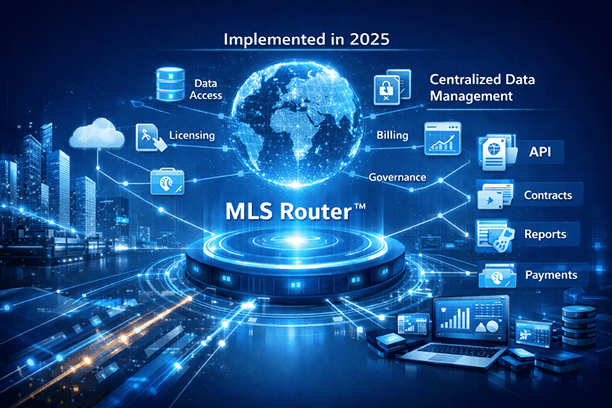
To modernize its data distribution model and support continued growth, SDMLS implemented RealtyFeed’s MLS Router™ in early 2025, which established a centralized, automated platform for managing data access, licensing, billing, and governance at scale.
The result: improved workflows, absolute data governance through real-time usage tracking, and a 100%+ increase in monthly feed revenue. This was achieved by transitioning from manual, flat-fee pricing to an automated, usage-based licensing model that secures the data and monetizes its true market value.

“MLS data is extremely valuable, but historically, MLSs haven’t had the tools to capture that value, especially as traditional subscription models become less certain.”
— Saul Klein, CEO – San Diego MLS
The Challenge
Before implementing MLS Router™, SDMLS operated within a data licensing environment that had become increasingly difficult to scale. Day-to-day data services relied on a fragmented set of tools and processes, with data and feeds that were not RESO certified. This lack of standardization meant that feed structures were confined mainly to traditional IDX and VOW use cases, requiring extensive manual mapping for any new integration. As demand for MLS data grew, particularly from non-traditional consumers, each new request introduced incremental administrative effort and technical debt, as the system struggled to speak the industry’s open standards language.
Billing and contract management were manual or semi-manual, vendor communication was time-intensive, and internal staff were required to manage a growing volume of exceptions. What had once been a manageable operational function began to strain under its own success.
SDMLS needed a way to support new data use cases, improve operational efficiency, and maintain strong governance without adding staff or increasing risk.
The Cost of the Status Quo
A critical driver for this modernization was the growing threat of the real estate ‘grey market.’ Traditional data distribution relies on replication (copying entire databases to third-party servers) which creates a high risk of unauthorized data leakage. Research from REdistribute¹ highlights that when broker-licensed feeds (like IDX) are quietly repurposed for institutional analytics or AI without fair compensation, the industry loses as much as $100 million annually in recurring revenue.
By utilizing an API-first architecture, SDMLS eliminates the need for downstream replication, ensuring that data access is governed, visible, and monetized directly at the source. Legacy replication models make it nearly impossible to detect or prevent the unauthorized ‘back-door’ commercialization of listing data.
The Solution: MLS Router™ by RealtyFeed
MLS Router™ is a centralized data distribution and licensing platform, explicitly designed for MLS organizations to manage how their data is accessed, governed, and monetized. It provides a single system of record for data feed configuration, vendor relationships, billing, and usage oversight, which replaces the current patchwork of manual processes, spreadsheets, and one-off workflows.
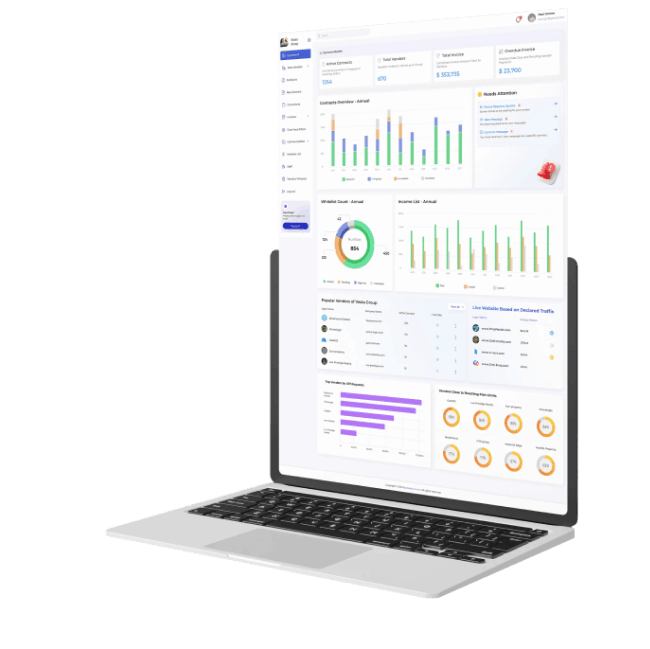
Through MLS Router™, MLSs can define standardized and custom feed types, apply filters and rules based on licensing terms, automate billing cycles, and gain clear visibility into who has access to what data and for what purpose.
This creates a foundation that supports both traditional IDX/VOW use cases and emerging data consumers such as analytics platforms, AI training, and research applications.
In addition to operational and commercial improvements, MLS Router™ introduced a fundamentally different technical architecture for MLS data distribution. The platform is fully API-driven and RESO Web API 2.0 compliant, and can eliminate the need for downstream data replication that often fuels unauthorized reuse and grey-market data circulation. Instead of copying data into third-party systems, MLS Router™ can deliver MLS data securely and in real time, directly from the source, with full entitlement and usage controls enforced at the API level.
Note: while the industry is moving toward a real-time future, many vendors still rely on replication. MLS Router™ supports both legacy RESO Web API replication and modern on-the-fly, real-time queries.
The Path to Standardization: Achieving RESO 2.0 Certification
Prior to partnering with RealtyFeed, SDMLS operated without formal RESO certification, creating significant barriers for modern technology vendors. The foundational phase of the project focused on bridging this gap. Through the implementation of MLS Router™, RealtyFeed successfully secured RESO Data Dictionary 2.0 and RESO Web API 2.0 certifications for SDMLS. This achievement effectively standardized the language of SDMLS data, removing the friction of custom mapping and instantly opening the market to a global network of tech companies and AI developers ready to adopt the feed.
“MLS Router™ has fundamentally changed how we think about MLS data. It’s no longer just about distributing feeds. It’s about governance, transparency, and creating new revenue opportunities in a way that scales. For the first time, we can measure usage, manage licensing, and monetize data through a single operating system.”
— Saul Klein, CEO – San Diego MLS
Outcomes
1. Workflow and Operational Efficiency
SDMLS significantly reduced the internal effort required to license and manage data distribution.
MLS Router™ delivered workflow improvements in licensing and data distribution, reducing staff time required and delivering better, more consistent results.
In addition to streamlining licensing and feed management, MLS Router™ improved day-to-day staff workflows through built-in CRM and log history capabilities.
Impact:
- Reduced friction to manage licensing workflows
- Less staff time per vendor
- More consistent and reliable outcomes
“We can manage two-way messaging for each contract, communicate directly with vendors, and store files at both the contract and vendor level, all within a single system. We now have a complete ‘soup-to-nuts’ operational lifecycle, from initial vendor inquiry and automated contract execution to usage-based billing and proactive licensee management, all within a single system of record..”
– Paul Elmore, Data Services Coordinator – San Diego MLS
2. Revenue Growth and Predictability
MLS Router™ materially changed both the scale and structure of SDMLS’s feed-related revenue.
Results:
- A shift from quarterly billing to monthly billing cycles (powered by Stripe)
- Improved billing accuracy through automation
- Monthly feed revenue more than doubled
- Improved cash flow management and predictability by moving to monthly billing
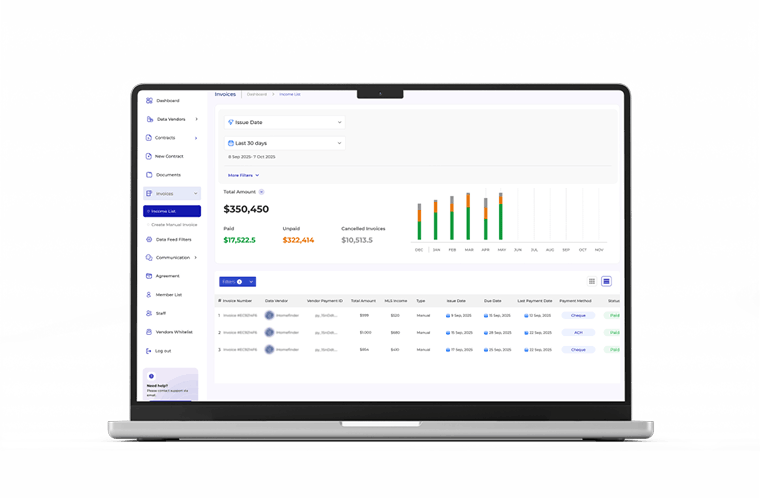 This transformed data licensing from an administrative function into a meaningful, predictable revenue stream.
Beyond the direct income, the platform’s automation creates a leaner, more efficient distribution model that drastically reduces technical overhead and manual oversight, contributing directly to the health of SDMLS’s bottom-line.
3. New Monetizable Use Cases
Advanced data entitlement transformed the MLS from a traditional utility into a specialized data provider.
Before this implementation, SDMLS was largely limited to supporting standard display use cases (IDX/VOW), which are often low-margin or included in membership dues. By moving to a granular, API-based entitlement model, SDMLS can now target high-growth sectors:
AI Training & Large Language Models (LLMs)
AI developers require massive, high-quality datasets to train predictive models and ground conversational agents. SDMLS now has the option to license specific, historical, and real-time data subsets as proprietary training data, a product that commands much higher fees than standard website feeds.
Institutional Research & Predictive Analytics
Investment firms and research institutions use granular MLS data to forecast market shifts and appreciation rates. SDMLS can now offer Bulk Data licenses, providing these entities with structured access to the entire market’s history without the administrative burden of manual data dumps.
Specialized Appraisal & Valuation Tools
By offering custom API endpoints for Back-Office and Analytics use cases, SDMLS can enable vendors to build high-precision Automated Valuation Models (AVMs). These specialized tools rely on the RESO Data Dictionary 2.0 standards now supported by SDMLS, ensuring the data is instantly usable for complex calculations.
4. Governance and Visibility
Granular data visibility transformed a ‘black box’ licensing model into a fully transparent, auditable ecosystem.
Governance improvements included:
- Real-time behavioral analytics to proactively monitor how licensees interact with data, allowing SDMLS to identify emerging use cases and potential compliance issues before they escalate.
- Easier contract and entitlement management
- Ongoing improvement through dashboard enhancements
This provided SDMLS with greater confidence in compliance and enforcement while supporting expansion into new data use cases.
A key benefit of MLS Router™ is the ability for SDMLS to govern data access on a case-by-case basis. SDMLS can now decide whether to allow replication or require real-time access on a per-vendor basis. This allows them to protect their data while supporting high-value analytics at the source.
5. Modern, API-First Architecture and Performance
Legacy data silos were consolidated into a modern, RESO certified API-first architecture that prioritizes industry standards.
Key technical benefits included:
- A fully API-driven architecture, allowing MLSs to move to methods that reduce governance risk and operational overhead.
- Full compliance with RESO Web API and Data dictionary 2.0 standards, ensuring compatibility with modern vendor and developer ecosystems.
- Proactive log driven controls to strengthen licensee management while reducing effort.
- Active security orchestration by moving from passive “gatekeeping” to a proactive defense model that can detect and block unauthorized data scraping or “grey market” repurposing at the moment of attempt.
- API based tools that not only support technology providers, but allow the offering of easy to implement tools for all technical levels.
“MLS Router represents a new holistic take on data licensing. While supporting common use cases today, Realty Feed is intersecting a broader picture with truly agile development that allows the MLS to quickly adapt to shifting committee policies, governance rules, and custom feed requirements without the long development cycles typical of legacy platforms.”
– Rob Larson, Strategic Advisor, RealtyFeed Inc.
The transition to an API-first model didn’t just improve governance; it redefined performance. SDMLS achieved an average complex query response time of less than 350ms, demonstrating that a real-time, RESO-compliant delivery model can outperform legacy replication-based systems while significantly reducing the operational overhead of managing thousands of localized data copies.
For SDMLS, this combination of performance, security, and standards-based architecture positioned MLS Router™ not just as an operational tool, but as a future-ready data infrastructure capable of supporting real-time applications, analytics platforms, and AI-driven use cases.
To simplify the transition, RealtyFeed developed proprietary frontend technology that connects directly to the API in real-time. This eliminated the financial burden of maintaining a local database for data consumers.
“The shift to standards-based, real-time API required rebuilding our entire data distribution pipeline (RESO field mapping, query optimization, custom feed configurations). But the result is what MLSs actually need: full visibility into data usage, real-time performance, and the flexibility to support everything from traditional IDX to AI training feeds.”
— Johnny Thrash, Data Systems Manager, San Diego MLS
Summary Results
| Before MLS Router™ | After MLS Router™ | |
|---|---|---|
| Data Governance | High risk (Uncontrolled replication) | Low risk (API-level entitlement) |
| Market Integrity | Vulnerable to Grey Market leaks | Governed and monitored pathway for all use cases |
| Revenue Stream | Manual, quarterly billing | 2–3x increase via automated monthly billing, improved cash flow |
| Operational Effort | High staff time per vendor | Streamlined CRM & automated workflows |
Key Takeaway
By implementing MLS Router™, SDMLS transformed data licensing from a constrained operational necessity into a scalable, revenue-generating business capability, without increasing internal capacity. Just as importantly, SDMLS adopted a modern, API-first data architecture that improves performance, reduces governance risk, and positions the MLS for emerging real-time and AI-driven data use cases.
SDMLS has moved beyond being a data utility and is now operating a modern data ecosystem that protects its brokers’ most valuable asset.

“MLS Router™ provides the foundational infrastructure for MLSs to manage data as a strategic line-of-business. By replacing legacy systems and processes with measurable, API-driven usage, we are helping the industry reclaim the value of its data while providing the security and transparency that brokers deserve.”
— Patrick Pichette, CEO – RealtyFeed Inc.
Call to Action
The SDMLS transformation proves that MLSs no longer have to choose between data security and revenue growth. By adopting an API-first architecture, your organization can reclaim control over the “grey market,” eliminate unauthorized replication, and turn data licensing into a high-performance business unit.
Don’t just distribute data…orchestrate your ecosystem with proactive security.
¹The Market Value of Listing Data—and the Cost of the Grey Market
Sorry, the comment form is closed at this time.